Case Study | Operating Company

With LightOn, Operating companies spot recurring failures before they immobilize their fleet

How do you see a fault coming when it is described ten different ways, in three languages, by teams that never talk to each other? With LightOn, the company turned thousands of maintenance reports, once read and forgotten, into a weekly early-warning signal for its reliability team.

Thousands of reports, each read once

The company operates a fleet of equipment across some twenty sites in France and Europe. Every intervention leaves a report written by the technician: a few lines typed in a hurry, sometimes a photo, often with vocabulary specific to each site.

That adds up to thousands of reports a year. Each one is read once, then archived in the maintenance management system.

When the same defect starts affecting a component, it is described ten different ways, in three languages, by teams that do not talk to each other. The connection is only made once failures multiply and the fleet stops, with costly downtime and availability commitments no longer met.

Internal tools only work on the structured fields of the maintenance system. The free text, multilingual and written in each site's own words, goes unused.

A watch over intervention reports

With LightOn Apps, the company set up a continuous watch over its intervention reports, whatever their format, site or language.

  • Reports collected continuously, all sites and all languages included.
  • Each report structured: equipment, component, symptom, action taken, each linked to the original report.
  • Similar descriptions grouped, even when the same problem is worded differently.
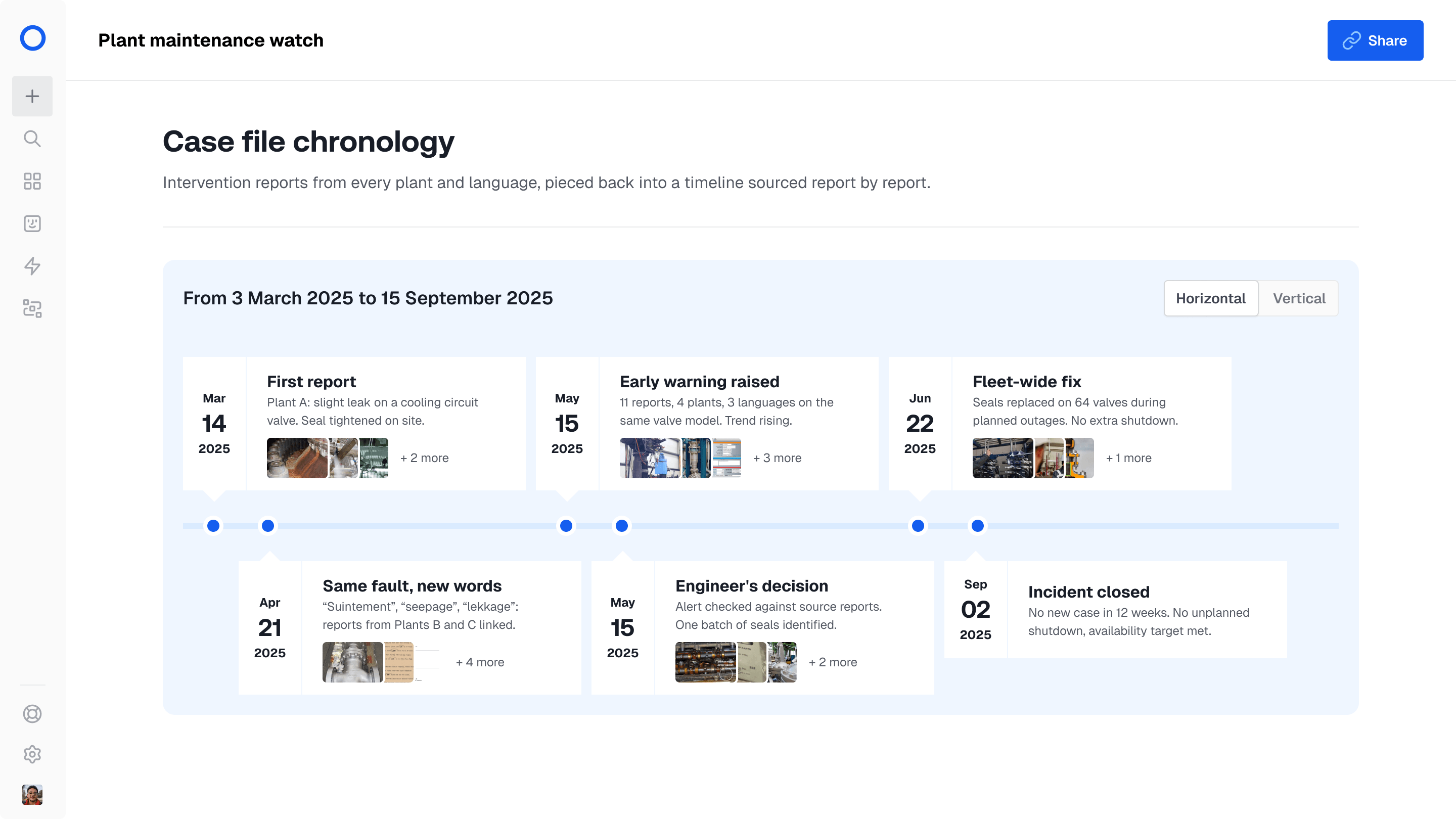
  • Chronology rebuilt per component and per site, so that what is accelerating becomes visible.
  • Ambiguous cases sent to the reliability engineer instead of being settled by the machine.

Every week, the reliability team receives a summary of emerging recurrences: components concerned, sites affected, trend over time. Each signal points back to the interventions behind it.

The reliability engineer still decides. Every alert links to its supporting reports, so they can check it in a few clicks and choose which actions to launch.

Failures caught at the first signals

Recurring defects are now spotted at the first signals, not when they bring the fleet to a halt.

Intervention reports, once a mere administrative obligation, have become a source of alerts reviewed in the operations committee, and a reliability argument with customers.


Turning paperwork into foresight

An immobilized piece of equipment means a production line stopped, a train that does not run, a machine down at a customer's site. Fleet availability is the number one indicator for operations, and it often comes with contractual commitments and penalties.

The company now reads its own history before it repeats itself.

The company's failure reports were sleeping in an archive. LightOn showed which failures kept coming back.

What are yours not telling you?

Request a demo